
The model that educated da Vinci, Newton, and Mozart - and looked nothing like a classroom
Between ancient Greece and the industrial revolution, one model dominated. A tutor and a student. Here's what that looked like.

If you missed Part 1, we traced how the word school once meant leisure - and how the first schools in Egypt, Greece, and China looked nothing like what our kids walk into every morning. You can read it here.
After ancient Greece, something interesting happened. Across Europe, literacy nearly collapsed. The monasteries kept books alive - copying manuscripts by hand, preserving what was left of Greek and Roman knowledge. For most people, there was no education at all. For the few who did learn, it happened one way: one person teaching another.
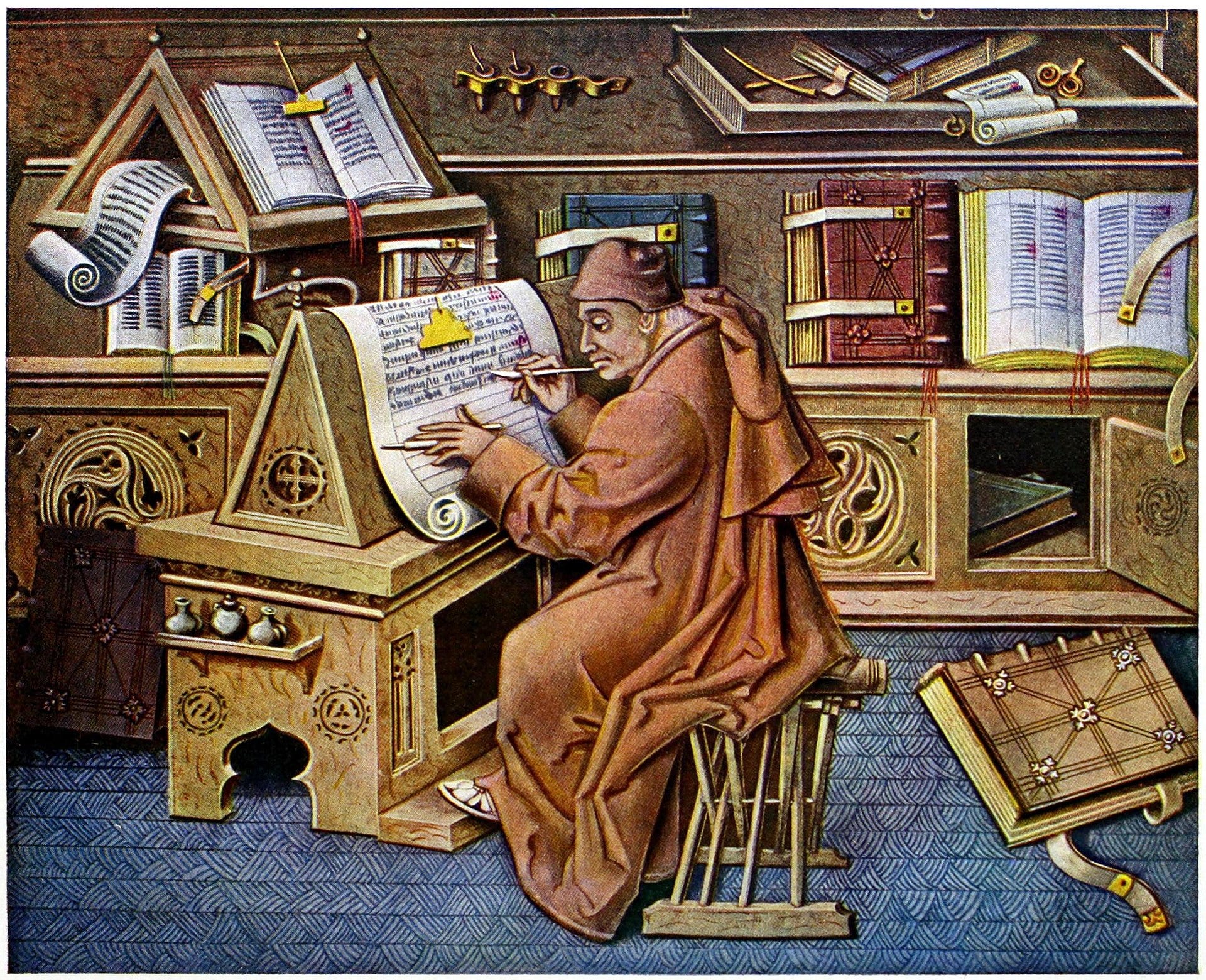
During the Islamic Golden Age (roughly the 8th through 12th centuries) private tutors were the primary model for educated families. Well-known scholars taught one-on-one in mathematics, philosophy, literature, and science. The House of Wisdom in Baghdad attracted the finest minds of the age to translate and build on classical knowledge. It wasn't a school in any modern sense. It was a gathering of people who wanted to learn, working closely with people who knew things.
The same pattern held across medieval Europe. Cathedral schools trained small numbers of boys, mostly for the church or for positions in state. Universities began emerging, Bologna in 1088, Paris around 1160, but they were tiny and served very few. For anyone else seeking serious learning, there was essentially one option: find someone who knew the thing, and learn from them directly.
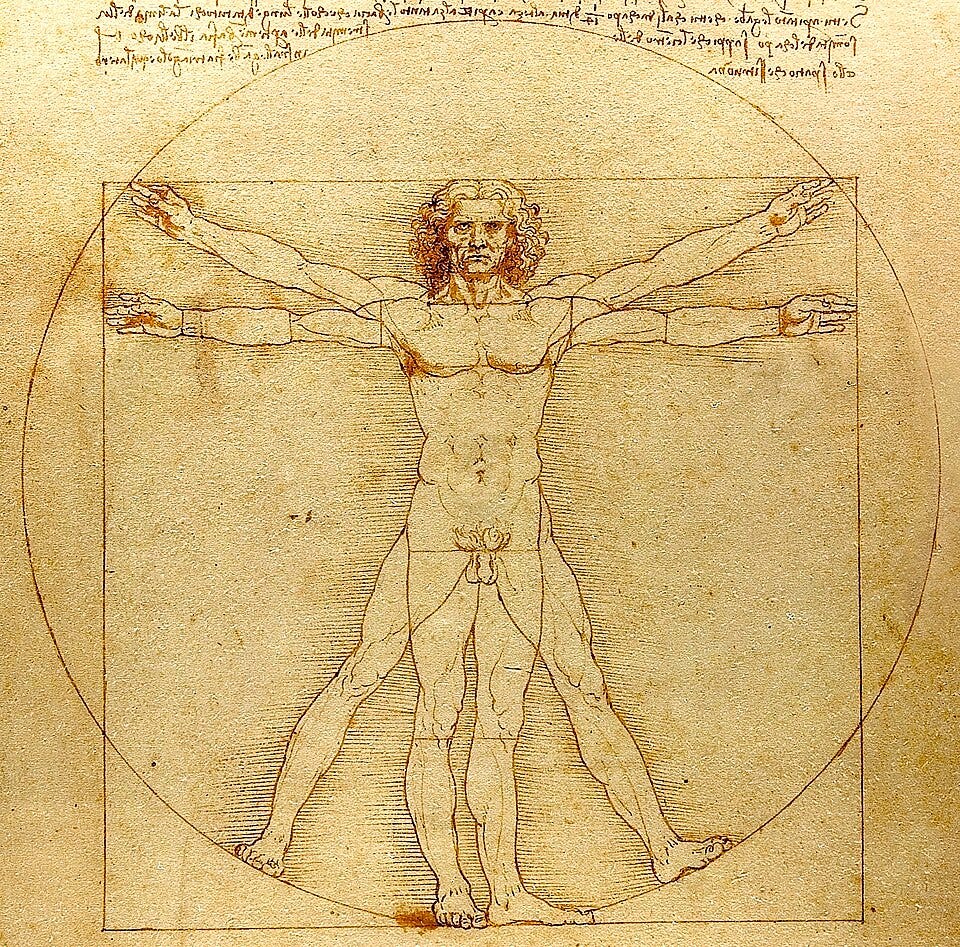
This is how Leonardo da Vinci was educated. At 14, he became a studio boy in the workshop of Andrea del Verrocchio - the leading painter and sculptor in Florence at the time. He stayed for seven years. In that workshop he learned drafting, chemistry, metallurgy, mechanics, woodwork, painting, and sculpting. Not from a textbook. From working alongside a master, on real projects, every day. At some point during those years, Verrocchio gave Leonardo a small section of a painting - an angel in The Baptism of Christ. He painted it so well that Verrocchio reportedly put down his brush and never painted again.
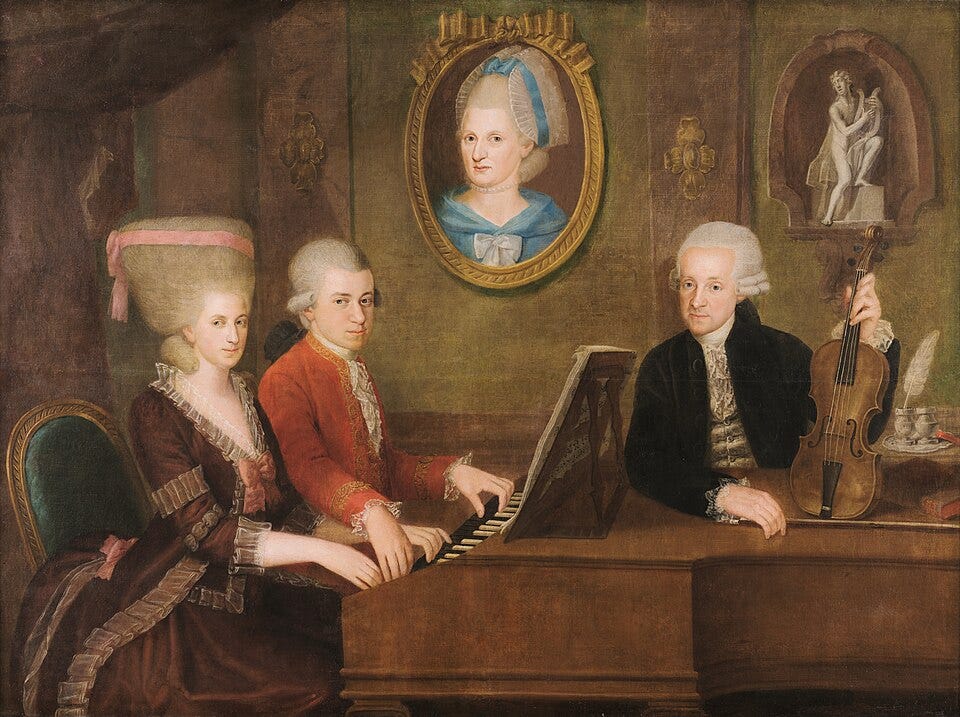
Mozart never sat in a classroom. His father Leopold, a skilled musician and published pedagogy writer, was his only teacher. Mozart started keyboard at four. By five he was composing. He performed before European royalty before most kids start first grade. Part of that was clearly innate: Mozart was born with something extraordinary. But talent still needs someone to see it, shape it, and know what to do with it. Leopold did. What made the difference wasn't a curriculum. It was one deeply attentive person who understood exactly what his student was capable of and pushed accordingly.
By the time of the Renaissance, formal institutions were slowly reappearing. Universities like Oxford, Cambridge, and Paris had been operating since the 12th century, but they still served a small minority. Grammar schools were spreading across England through the 1500s, mostly for boys from families with means or church connections. Most children learned a trade from a parent or a master, the way Leonardo had. And even those who did attend formal institutions found that the relationships that shaped them most were still one-on-one.
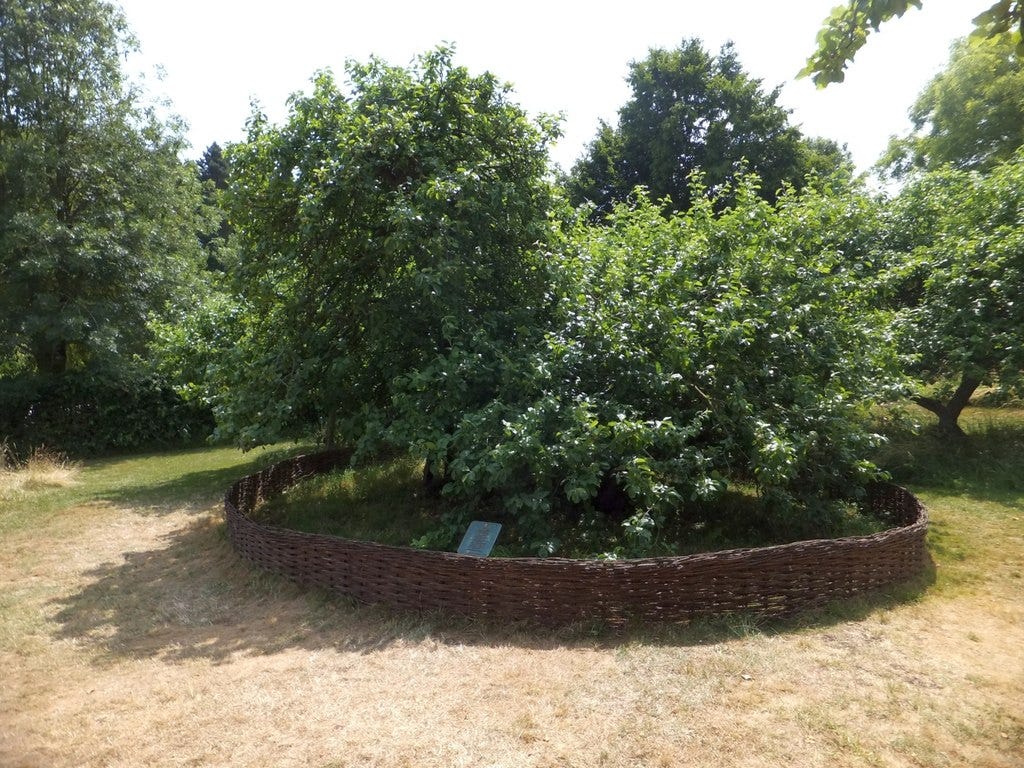
Newton is a good example. He attended King's School in Grantham (a grammar school founded in 1528) and later Trinity College Cambridge. But the period that changed everything came in 1665, when the plague forced Cambridge to close. Newton went home to Woolsthorpe and spent eighteen months teaching himself, following whatever he was curious about (sounds familiar?), with no one telling him what to study next. In that stretch he invented calculus, developed his theory of optics, and laid the groundwork for his theory of gravity. When Cambridge reopened, the relationship that mattered most was with professor Isaac Barrow, who mentored him one-on-one and recognized what Newton was capable of long before anyone else did.
Three very different people. Three very different fields. The same thread running through all of them: one person who knew the thing, one person who wanted to learn it, and enough time and trust for something real to happen.
For roughly a thousand years, this was how the people who shaped civilization were educated. Not in classrooms with thirty other kids their age. In workshops, in homes, in one-on-one relationships with someone who actually knew them.
So how did we move from that to the system we have today? Read that in Part 3.
The Practical
This week, notice who your child learns from most naturally - outside of school. A grandparent, a neighbor, a coach, an older kid. That relationship is probably doing more than you think. It doesn’t have to be formal to be real.
The Connection
This is the model we’re trying to bring back at Learning Lot. Not because it’s nostalgic, but because it works. A tutor who actually knows your child. Small groups where kids learn from each other too. Learning that follows curiosity, not a curriculum. We believe learning is limitless - and it can happen anywhere..
🎯 Want to match your child with inspiring tutors and like-minded peers in the Bay Area? Join the waitlist →
Further Reading
Leonardo da Vinci — Wikipedia
Wolfgang Amadeus Mozart — Wikipedia
Early life of Isaac Newton — Wikipedia
Education in Islam — Wikipedia