
How project-based learning was born, ignored, and is slowly coming back
Project-based learning started about 130 years ago. Here is the basic idea plus resources on how to do it.

In previous issues, we traced how modern school took shape. A system built for uniformity. Not for children's curiosity.
In 1896, one person looked at that system and decided to build something entirely different.
That person was John Dewey, a philosophy professor at the University of Chicago. Not a classroom teacher. He opened the Laboratory School with roughly 140 students and a dozen teachers, and called it a laboratory because that was the honest description: it was an experiment. His students cooked, built furniture, sewed, and gardened. Along the way, they learned science, math, and history - almost incidentally. In 1918, Dewey's student William Heard Kilpatrick formally named the approach "the project method" in a paper that became a widely distributed education text.
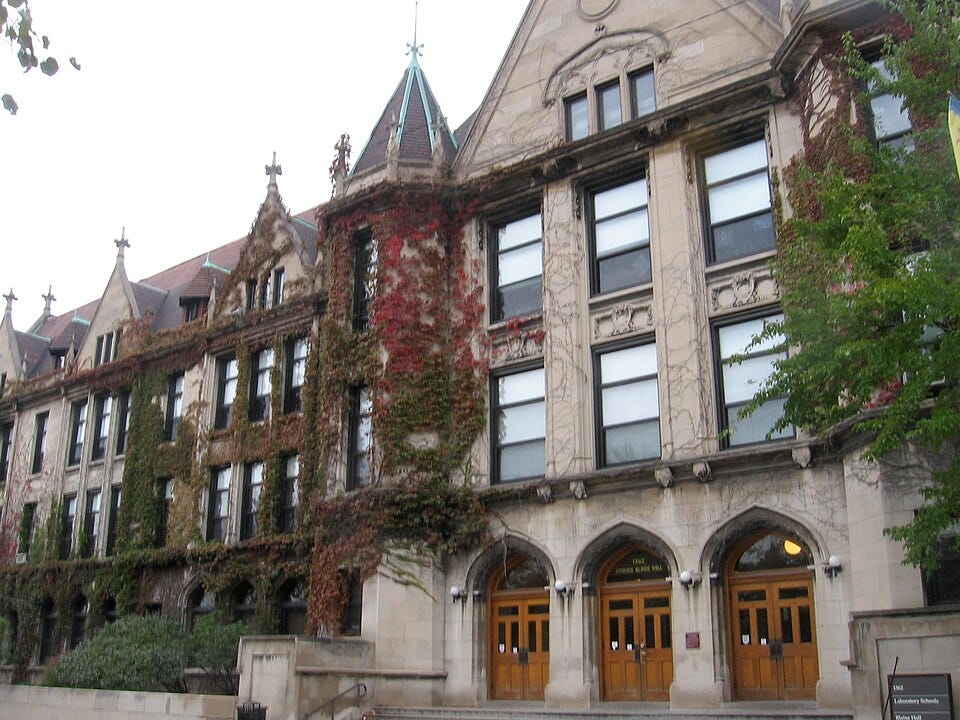
Dewey's argument was simple and radical at the same time: knowledge is not something that gets transferred from teacher to student. It's something the student constructs, through doing, through problem-solving, through genuine questions. A child who learns fractions by dividing a recipe actually understands fractions. A child who memorizes the procedure may not.
His vocabulary spread. 'Learning by doing.' 'Child-centered education.' The idea that school should follow the child found its way into teacher training programs across the country. Dewey became one of the most referenced figures in American education.
But vocabulary and practice are two different things. So why isn't this how most kids learn?
The system was already built: curricula, textbooks, teacher training, school buildings, all shaped around a different model. That model was also cheaper to run. One teacher, one textbook, thirty students can be replicated at scale. Dewey's approach required teachers skilled enough to build lessons around individual kids rather than follow a fixed curriculum. Standardized tests measure memorizing, not curiosity. After Sputnik in 1957, progressive education was blamed for American students falling behind, and schools were pushed back toward structured, content-heavy teaching.
Going against a system that has existed for over a century is just hard. It takes more than good ideas. Dewey had plenty of those. It wasn't enough.
However, the idea never went away. It lived on in Montessori schools, Reggio Emilia classrooms, and Waldorf programs, all built on the similar belief. Today, networks like Acton Academy run in over 300 locations worldwide. High Tech High in San Diego has built its entire model around project-based learning. Kids who go through these schools tend to describe learning very differently.
What it looks like at home
You don’t need a special school to bring this into your child’s week. The idea is simple: find what your child is genuinely curious about, and follow that question somewhere real. Then weave in critical thinking and problem-solving naturally.
Here are a few ideas to get started:
Design a board game or a card game and test it with friends
Start a mini business and track profits
Create a podcast about a favorite topic
Build a weather station
Design a Mars colony
Research family history and create a documentary
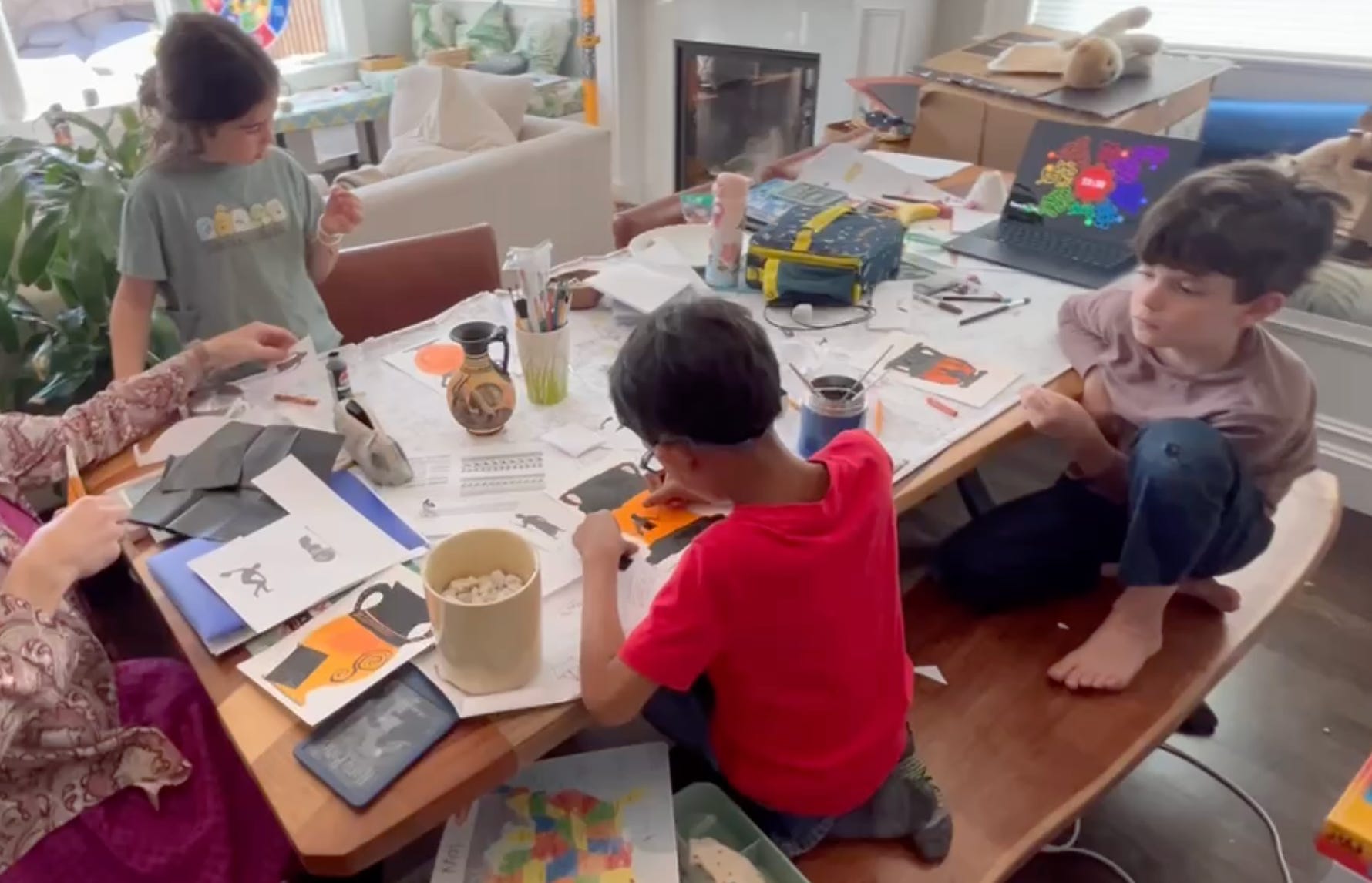
Create a museum exhibit about Ancient Greece
Write and illustrate a book
Invent a product and pitch it Shark Tank-style
When a child gets to choose and becomes invested in a project, everything changes. Learning becomes limitless.
The Practical
Programs and resources worth exploring
PBLWorks - free resources from the Buck Institute for Education; designed for teachers but accessible to any parent
Science Buddies - free database of over 1,000 science project ideas, searchable by grade level and topic.
KiwiCo - monthly hands-on project crates by age; science, engineering, art, and more.
Crunchlabs - monthly engineering/build kits and project-based learning activities designed to get kids building.
PBS Design Squad - free, engineering and design challenges for kids; kids solve real-world problems through hands-on projects. Very aligned with PBL.
DIY.org - kids learn skills by making things and sharing their process. Covers everything from cooking to electronics to art. Genuinely child-led.
Smithsonian Learning Lab - free access to millions of artifacts, specimens, and historical collections from Smithsonian museums. Great for research-based projects.
Programs & projects inspiration
Exploratorium Tinkering Studio - free online projects from San Francisco’s Exploratorium, where science, art, and technology meet. Bay Area families can also visit the Tinkering Studio in person at Pier 15.
Maker Camp - free library of 200+ hands-on projects for kids, from the makers behind Make: Magazine. Filterable by age, time, and materials.
Instructables - massive community-built library of step-by-step project tutorials. Kids and adults share how they made things, from simple crafts to electronics and woodworking.
The Connection
Finding the right match is the whole thing. A curious kid needs a guide who can meet them where they are and build around what they actually care about. That’s what Learning Lot tries to do, one family at a time.
If you’re in the Bay Area, we match families with tutors who follow kids’ curiosity and create projects with them. Join us here →
Further Reading
John Dewey - Wikipedia
University of Chicago Laboratory schools - Wikipedia
William Heard Kilpatrick - Wikipedia